
FG Promises 30% Uninterrupted Power Supply to Tertiary Health Facilities by 2027
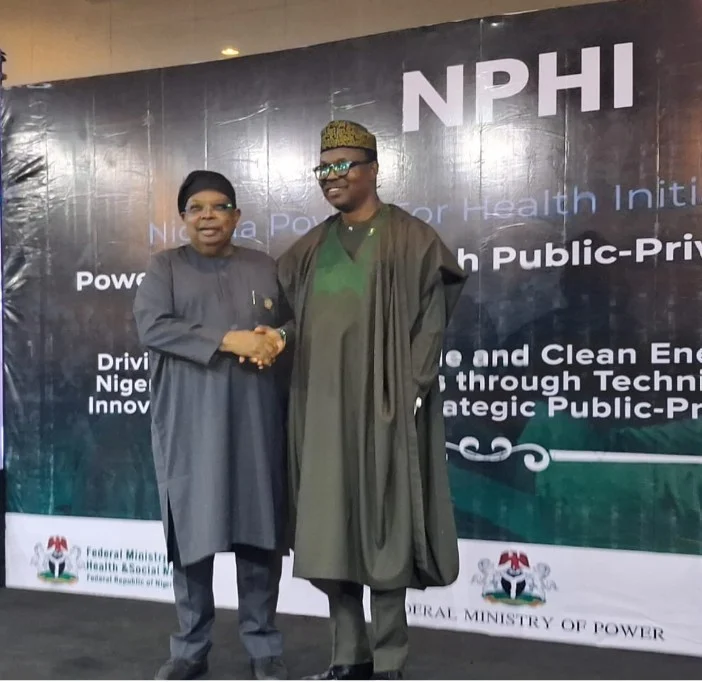
The Federal Government says it plans to strengthen healthcare delivery in the country by ensuring reliable power supply to over 35,000 health facilities through the Nigeria Power for Health Initiative (NPHI).
According to The Punch, the government promised to deliver a 30 per cent uninterrupted power supply to tertiary health facilities nationwide by the end of 2027.
The NPHI is designed to ensure a reliable and sustainable electricity supply across health facilities in Nigeria.
Poor electricity supply has remained a major challenge in the healthcare sector for decades. This has affected the performance of tertiary hospitals and primary healthcare centres, with the former burdened with exorbitant electricity costs that drain limited healthcare budgets.
The Minister of Power, Joseph Tegbe, and the Minister of State for Health and Social Welfare, Dr Iziaq Salako, disclosed this in Lagos on Monday while addressing stakeholders and investors at the National Healthcare Electrification Investor Matchmaking Forum under the NPHI, which seeks to ensure a steady power supply to health facilities nationwide.
The matchmaking forum, organised by the Ministries of Power and Health in collaboration with the United Kingdom PACT programme, brought together strategic stakeholders, investors, private sector players, development partners, government agencies, hospital administrators, and healthcare professionals to deliberate on lasting solutions to the challenge of power supply in health facilities.
The Minister of Power said the forum represented a critical milestone in “our collective efforts to address one of the most fundamental enablers of an effective health system — reliable, affordable, and sustainable electricity.”
Tegbe noted that electricity is a key factor for operating diagnostic equipment, preserving vaccines and medicines, performing surgeries, powering laboratories, providing lighting for emergency services, sustaining cold chain systems, and supporting digital health systems.
“As many in this room are aware, even before my appointment as Minister of Power, I have been a key stakeholder in the Nigeria Power for Health Initiative since its inception. This is not an ordinary programme for me — it is a personal commitment.
“Today, we are not merely discussing electricity; we are discussing saving lives and removing one of the major impediments to quality healthcare delivery through the solarisation of healthcare facilities across the country. Most importantly, we are discussing a future where no Nigerian is denied quality healthcare because a health facility lacks reliable electricity,” he said.
The minister further identified investment opportunities in solar mini-grids, hybrid energy systems, battery storage solutions, energy efficiency technologies, smart metering systems, facility energy management platforms, operations and maintenance services, and climate-resilient energy infrastructure.
“We are now moving beyond traditional grant-funded, unsustainable government funding and progressing to sustainable financing models that combine public resources, private capital, development finance, and innovative risk-sharing mechanisms,” he said.
He added that the ultimate beneficiaries of the initiative would be Nigerians through improved maternal healthcare services, reduced mortality rates, better vaccine preservation, enhanced emergency response capabilities, increased availability of diagnostic services, improved working conditions for healthcare professionals, extended operating hours for healthcare facilities, and improved patient confidence and satisfaction.
“The Federal Ministry of Power is a co-driver of this initiative. We are already in the field — the ministry has deployed solar mini-grids and hybrid systems to health facilities under the World Bank-funded Nigeria Electrification Project, and we are extending that work systematically into the NPHI framework.
“The power sector will deliver visible, measurable improvement, and health facilities are where that improvement must be felt first,” he assured.