
Dangote Credits Nigeria’s Fuel and FX Reforms for Refinery Growth
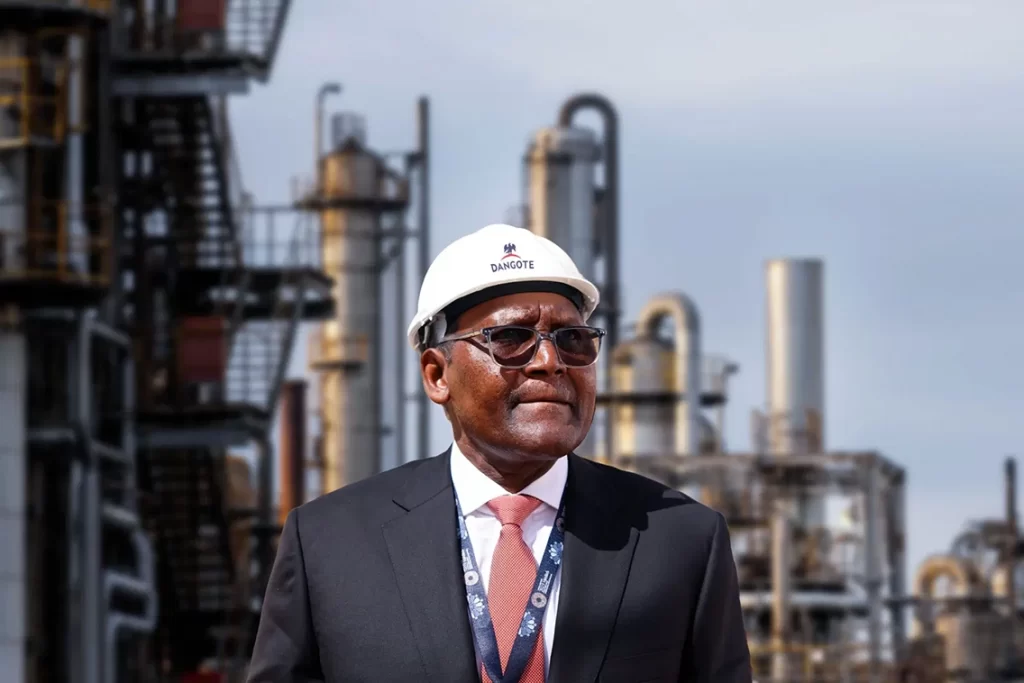
Aliko Dangote has credited some of the Federal Government’s major economic reforms with helping create the conditions for the growth of his company’s oil refinery and broader industrial investments.
Speaking in Lagos on Monday during the formal launch of the Dangote Petroleum Refinery and Petrochemicals’ initial public offering on the Nigerian Exchange, Dangote thanked President Bola Tinubu for taking what he described as bold steps, particularly the removal of the petrol subsidy and liberalisation of the foreign exchange market.
According to Dangote, the policy changes have helped create a business environment where companies can invest and operate with greater certainty.
The comments come as the 700,000-barrel-per-day Dangote Refinery moves into a new phase of expansion and public ownership. The refinery’s IPO offers 4.1 billion shares at N525 each, with the offer scheduled to close on October 13, 2026.
For Nigeria’s energy sector, the significance goes beyond the IPO.
The removal of the petrol subsidy in 2023 fundamentally changed the economics of fuel supply by ending a system that had kept petrol prices artificially low while placing a significant burden on public finances.
The government has argued that the reform has created additional fiscal space, while the unification of the foreign exchange market has improved price discovery and reduced distortions in access to foreign currency. Between June 2023 and December 2025, the Federal Government says subsidy savings mobilised ₦15.8 trillion for the Federation.
Dangote has previously linked the refinery’s performance to this changing policy environment, saying the reforms have supported investment, domestic industrialisation, local refining capacity and reduced dependence on imported petroleum products.
The refinery is now increasingly important to Nigeria’s energy landscape as the country shifts from heavy reliance on imported refined products towards greater domestic refining and potential fuel exports.
However, the wider reform story remains mixed. While the government and investors point to stronger fiscal conditions and improved investment prospects, Nigerians have also faced significantly higher petrol prices and broader cost-of-living pressures since the reforms began. The Federal Government itself has acknowledged that household welfare and poverty reduction remain unfinished challenges.
As the refinery expands its operations and opens its ownership to public investors, its trajectory will increasingly serve as a test of whether Nigeria’s economic reforms can translate into stronger domestic production, energy security and long-term industrial growth.