
Nigeria’s Electricity Problem Is Also a Gas Problem
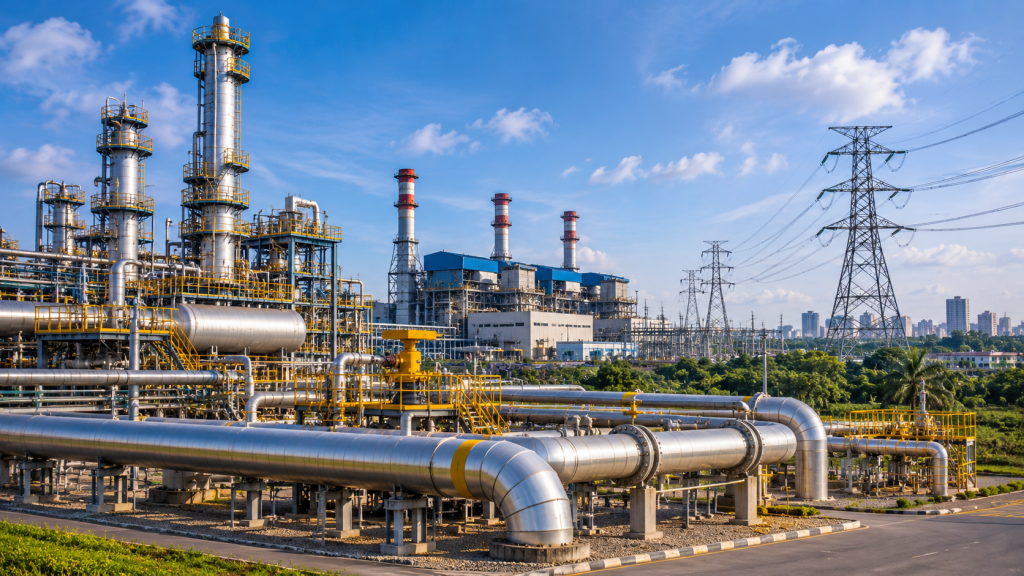
In early November 2026, electricity consumers across several parts of Nigeria experienced another decline in power supply. The familiar questions followed: Why is electricity generation falling, and why are households and businesses once again bearing the consequences?
The Nigerian Independent System Operator (NISO), in a statement issued on November 5, provided an explanation, attributing the decline in electricity generation primarily to constraints in gas supply to thermal power plants and reduced output from hydroelectric power stations.
According to NISO, limited gas availability had constrained the ability of affected thermal plants to operate at their available levels, while reduced water inflows into reservoirs had affected hydroelectric generation. The resulting decline in available generation reduced electricity allocations to distribution companies, leading to fewer supply hours and increased load shedding.
This is not the first time this year that the system operator has linked power supply challenges to gas availability.
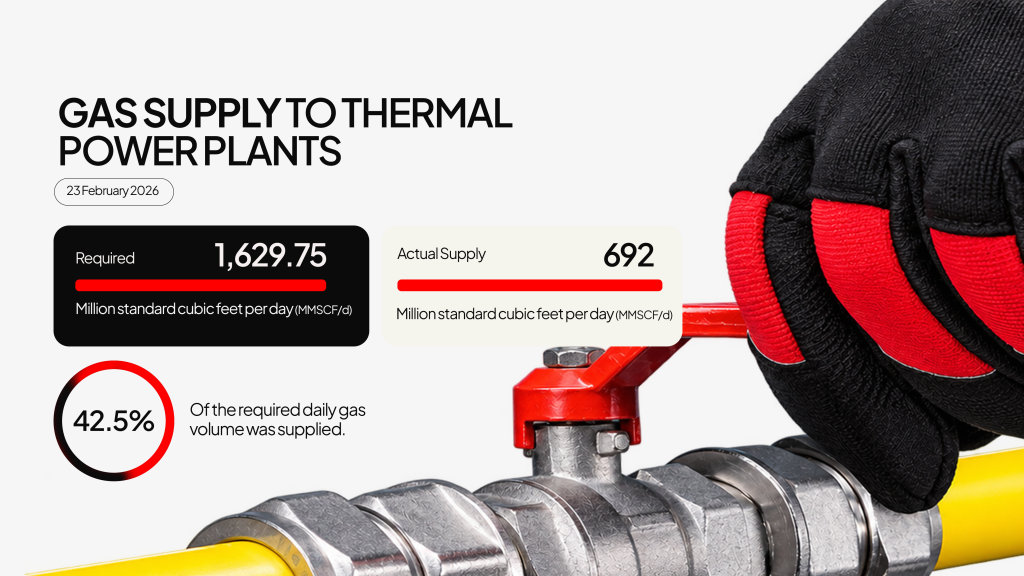
In February 2026, NISO reported that thermal power plants were receiving less than 43% of their required gas volume. The plants required approximately 1,629.75 million standard cubic feet of gas daily but were receiving only about 692 million standard cubic feet per day as of February 23.
There is, however, another side to the November development. On November 7, the Nigerian National Petroleum Company Limited (NNPC) said that the gas transportation network operated by its subsidiary, NNPC Gas Infrastructure Company Limited, had no operational constraints that could explain the generation decline. It also emphasised that pipeline availability, actual gas deliveries to individual power plants, commercial supply arrangements and gas offtake are separate issues that need to be examined.
The Minister of Power, Joseph Tegbe, also attributed the recent outages to planned maintenance at Egbin Power Station and gas supply constraints affecting some thermal plants.
These explanations highlight an important point: Nigeria’s gas-to-power problem is not necessarily about one single failure. It involves several interconnected parts of the energy value chain.
In our previous analysis, Nigeria Has 13,625MW of Installed Power Capacity. So Why Is Electricity Still Unreliable?, we explained that Nigeria cannot effectively power its electricity generation fleet without reliable fuel supply, particularly gas, which is essential to a significant portion of the grid-connected thermal generation fleet.
This article examines a related but deeper contradiction: how can a country with substantial natural gas resources struggle to supply the fuel needed to power its electricity system?
Understanding the Gas-to-Power Value Chain
Before examining the challenges, it is important to distinguish between some commonly used gas-sector terms. They do not necessarily describe the same thing.
| Term | What it tells us |
|---|---|
| Gas reserves | Estimated quantities of gas classified as recoverable under specified technical and commercial conditions. |
| Gas production | The volume of natural gas produced over a specified period. |
| Gas processing | The treatment of produced gas to meet the required quality specifications. |
| Gas transportation | The movement of processed gas through pipelines or other infrastructure. |
| Domestic gas delivery | Gas physically supplied to domestic customers or delivered under applicable domestic supply obligations. |
| Power-sector gas supply | The volume of gas delivered to electricity-generating companies. |
| Electricity generation | The electrical energy produced by power plants using available fuel and operational capacity. |
The distinction is important because having gas reserves does not automatically mean that the gas has been produced, processed, transported or delivered to the power plants that need it.
Nigeria Has the Gas. Why Is Supply Still a Challenge?
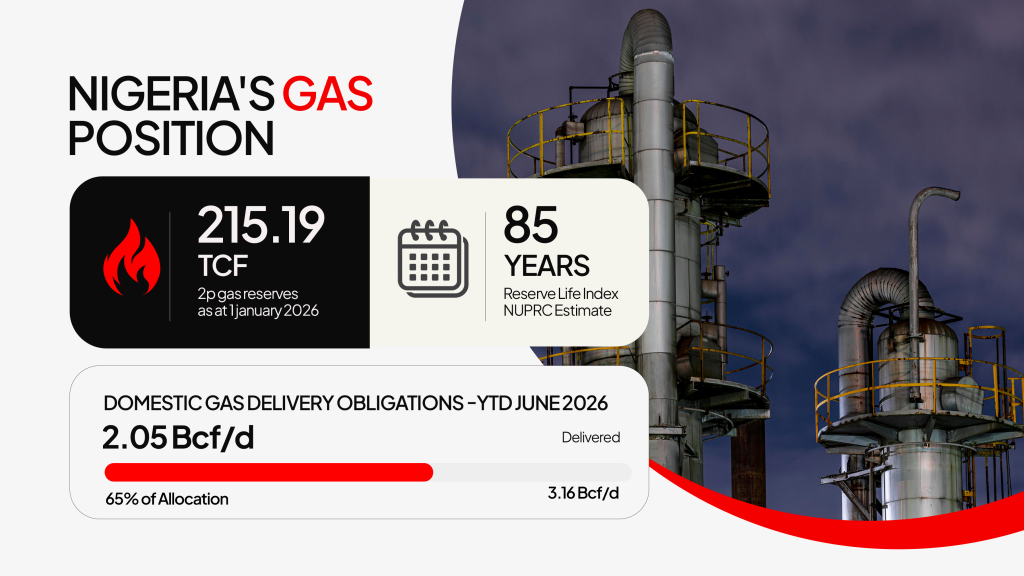
According to the Nigerian Upstream Petroleum Regulatory Commission (NUPRC), Nigeria’s 2P gas reserves stood at 215.19 trillion cubic feet (TCF) as of January 1, 2026. The Commission also reported a gas Reserve Life Index of 85 years.
These figures reinforce Nigeria’s position as a country with substantial natural gas resources. However, reserves should not be confused with available supply. The existence of gas underground does not guarantee that it can be produced economically and delivered to domestic users when required.
The challenge becomes clearer when we examine NUPRC’s domestic gas delivery figures.
In July 2026, the Commission reported that average Domestic Gas Delivery Obligation performance stood at 2.05 billion cubic feet per day (Bcf/d) against an allocation of 3.16 Bcf/d, representing approximately 65% performance for the year-to-date period ending June 2026.
Of the approximately 63 producing companies, 27 had been allocated domestic gas delivery obligations, but only 23 were actively supplying gas to domestic customers.
This means that allocated domestic delivery obligations were not translating fully into actual supply. It is important to note that these figures measure performance under the Domestic Gas Delivery Obligation framework; they are not a measure of total national gas production or the precise volume available to power plants.
Nevertheless, they reveal a significant gap between allocated obligations and actual domestic delivery.
The Major Bottlenecks
1. Physical Gas Supply and Production Constraints
Gas must be produced, processed and made available before power plants can use it.
Nigeria’s gas production has grown, but increasing production alone does not guarantee that domestic requirements will be met. The volume produced must be available in the right locations, meet the required specifications and be commercially accessible to buyers.
Other factors that can affect supply include insufficient production from supplying fields, processing limitations, operational disruptions, pressure constraints and interruptions along the supply network.
Gas flaring is another important concern. Rather than being captured, processed and put to productive use, significant volumes of natural gas continue to be wasted.
According to BudgIT’s report, Nigeria’s Gas Flaring Crisis in Numbers, approximately 817.4 billion cubic feet of gas was flared between 2021 and 2024. The report estimates that this volume had the potential to generate more than 110,000 GWh of electricity.
This is an estimated generation potential, not electricity that could automatically have been supplied to the grid. Capturing, processing and transporting the gas would require appropriate infrastructure and investment.
Nevertheless, the figures illustrate the economic and energy value being lost through continued gas flaring.
2. Infrastructure Gaps and Lack of Coordination
Having gas underground does not guarantee that it can be delivered economically to a power station.
Gas infrastructure, particularly pipelines and processing facilities, is essential to connecting production locations with domestic demand centres. Where infrastructure is inadequate, ageing, damaged or unavailable, gas may remain stranded or difficult to evacuate.
This is one of the issues NUPRC has repeatedly highlighted.
Speaking in May 2026, the Commission’s Chief Executive, Oritsemeyiwa Eyesan, called on stakeholders across the gas, power and financial sectors to stop operating in silos and embrace coordinated solutions.
She noted that the disconnect between upstream producers, infrastructure developers and electricity distribution companies had undermined progress for decades.
This is particularly important because investment in gas production must be accompanied by investment in the infrastructure required to transport and deliver the gas. Equally, the power sector must be commercially and operationally capable of receiving and paying for the supply.
NUPRC’s proposed Gas Swap Framework is one attempt to address this problem. The framework is designed to allow operators with stranded gas or limited evacuation options to work with operators who have the infrastructure to deliver gas to domestic users.
The objective is to turn domestic delivery obligations into actual physical supply.
3. Commercial Viability, Gas Pricing and Payment Arrears
Gas producers and suppliers need revenue to sustain production and delivery. Power generators, on the other hand, need sufficient cash flow to pay for gas, maintain generating equipment and meet operational expenses.
When payments across the electricity value chain are delayed or inadequate, the consequences can extend to gas supply.
The result can be a damaging cycle:
Weak electricity-sector cash flow → Payment difficulties → Constrained gas supply → Lower generation → Less electricity available for sale.
The pricing framework also matters.
Under the domestic gas pricing framework, the Nigerian Midstream and Downstream Petroleum Regulatory Authority (NMDPRA) set the 2026 Domestic Base Price for power-sector gas at US$2.18 per million British thermal units (MMBtu), effective April 1, 2026, compared with US$2.13 previously.
However, the base price alone does not determine the full cost of delivering gas to a power plant. Transportation, processing, contractual arrangements and payment reliability also influence the economics of supply.
The central question is whether the pricing and payment arrangements provide sufficient commercial incentive for suppliers and infrastructure operators while allowing power generators to obtain the gas they need sustainably.
There has been some movement on the financial side. On October 9, 2026, the Nigerian Bulk Electricity Trading Plc (NBET) commenced a ₦729 billion debt-settlement process for participating generation companies and their associated gas suppliers, following the issuance of bonds under the Federal Government’s power-sector financing programme.
This is a significant development, but its real impact should be measured by how effectively the settlement improves liquidity, reduces outstanding obligations and supports more reliable gas deliveries.
How Gas Constraints Become an Electricity Problem
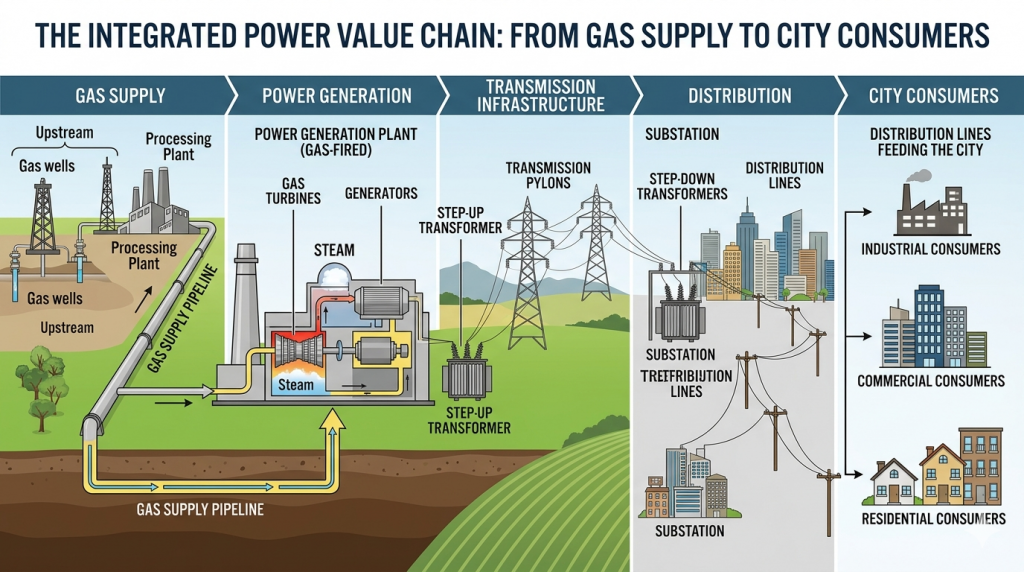
The relationship between natural gas and electricity generation is straightforward, but the process involves several stages.
Gas production and processing: Natural gas is extracted and processed to meet the specifications required by buyers and power plants.
Transportation and delivery: The processed gas must be transported through available infrastructure and delivered to the generating stations.
Power generation: Gas-fired power plants use the fuel to generate electricity. Their output also depends on plant availability, maintenance and operational readiness.
Transmission and distribution: Electricity generated must then move through the transmission and distribution networks before reaching consumers.
A problem at any of these stages can affect the final outcome.
This is why the disagreement between NISO and NNPC over the November power-generation decline deserves further scrutiny. NISO identified gas supply limitations, while NNPC said its own transportation network was available without operational constraints.
Both positions point to the need for more transparent, plant-level information about gas nominations, actual deliveries, consumption, outstanding payments and generating-unit availability.
Without this information, it becomes difficult to establish precisely where the constraint occurs.
The Economics of Nigeria’s Gas Supply
Gas produced in Nigeria serves several markets. It is exported, used domestically for power generation, supplied as feedstock to gas-based industries such as fertiliser and petrochemicals, and used for industrial heating and other applications.
Liquefied petroleum gas (LPG), derived from natural gas processing, also serves the domestic cooking market.
This means that the domestic power sector competes for gas within a wider market involving different customers, infrastructure requirements and commercial arrangements.
The challenge is therefore not simply about deciding how much gas should be reserved for electricity generation. It is about building a domestic gas market in which producers have incentives to supply, infrastructure operators can recover investments, and buyers can meet their payment obligations.
Nigeria’s gas resources can only create their full economic value when they are commercially developed, transported and utilised.
What Needs to Change?
Addressing Nigeria’s gas-to-power challenges requires more than announcing new production targets. It requires practical improvements across the entire value chain.
Improve physical delivery. Build, maintain and connect the infrastructure required to move gas from production sites to power plants. Existing infrastructure must also be maintained and operational disruptions addressed.
Strengthen commercial arrangements. Improve payment discipline, settle outstanding obligations and establish bankable gas-supply and transportation contracts.
Turn obligations into actual deliveries. Measure the volume of gas physically supplied to domestic users and power plants, rather than treating allocations and production targets as proof of supply.
Coordinate the gas and electricity markets. Align upstream production, midstream infrastructure, generation requirements and electricity-market payments. The proposed Gas Swap Framework should be assessed by its ability to improve actual domestic delivery.
Promote alternative and decentralised energy solutions. Expand renewable energy, battery storage and distributed generation to complement the national grid and provide more reliable options for households and businesses.
Conclusion: Nigeria Needs More Than Gas Reserves
Nigeria’s 215.19 TCF of gas reserves represent a significant national resource. But the value of that resource is measured not simply by how much gas exists underground, but by how much can be produced, processed, transported, commercially supplied and converted into electricity.
Gas is undoubtedly an important part of Nigeria’s electricity challenge. However, addressing the problem requires a coordinated approach that considers the economics of supply, infrastructure availability, payment discipline and the operational capacity of power plants.
Nigeria doesn’t just need more gas. It needs more gas that can be reliably delivered, commercially sustained and converted into usable electricity.