
Nigeria Plans to End Crude Oil Exports
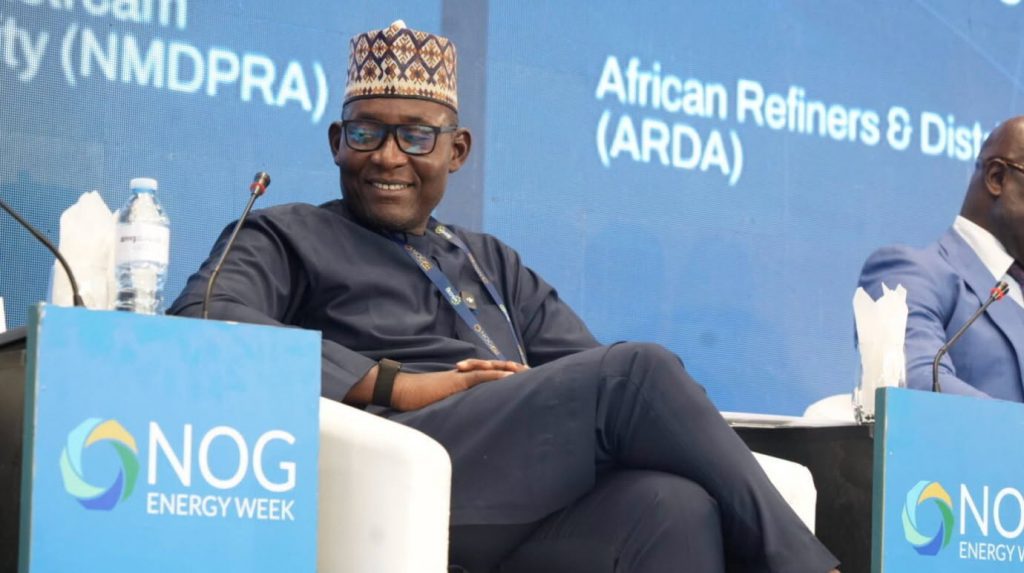
The Federal Government says the country is working towards ending crude oil exports as Nigeria expands its refining capacity and seeks to transform into a major hub for refined petroleum products in Africa.
Rabiu Umar, the Chief Executive of the Nigerian Midstream and Downstream Petroleum Regulatory Authority (NMDPRA), disclosed this on Monday at the 49th Nigeria Annual International Conference and Exhibition organised by the Society of Petroleum Engineers Nigeria Council in Lagos.
Umar said with the expansion of the country’s refining capacity, crude oil should increasingly be processed locally rather than exporting the raw commodity. He said the entrance of new private and modular refineries was rapidly transforming Nigeria from a crude oil exporter and importer of refined petroleum products into a regional refining hub.
“The fact that today, we have more refining capacity in Nigeria than we’ve ever had. And, of course, with the projects that are on stream and the expansions that we are also going to witness in the coming years, clearly Nigeria is going to turn into a refining hub for Africa, which means that perhaps every single molecule of our three million barrels a day production that we hope to achieve in the next couple of years will actually be refined locally.
“What that means, and I think this is a monumental shift, is a handshake between the upstream, midstream and downstream. Effectively, it’s not just exporting the raw crude, but making sure that what we actually end up exporting is the refined petroleum products. And I think this is quite substantial,” he stated.
The NMDPRA chief executive added that the agency was collaborating with the Nigerian Upstream Petroleum Regulatory Commission (NUPRC) to enforce the domestic crude supply obligation, which he described as critical to supporting the country’s growing refining industry.
“True resilience requires operational and commercial balance. And we remain steadfast in working with our sister agency, the NUPRC, in enforcing the domestic crude supply obligation. And this is really, really important because if we have enough refining capacity, really we don’t have any reason to be exporting crude oil.
“What that means, and I think this is a monumental shift, is a handshake between the upstream, midstream and downstream. Effectively, it’s not just exporting the raw crude, but making sure that what we actually end up exporting is the refined petroleum products. And I think this is quite substantial,” he stated.
Umar said the agency was also seeking to strengthen its position in the West African petroleum products market through the development of a regional pricing benchmark.
“Our idea is to see how we can actually turn Nigeria into a trading hub. Working with other West African regulators, how do we have one single standard or, if you like, specification for all the products that we consume? That way, people can move products from one region to another without constraint. Today, you hear 50 ppm, somewhere it’s 200 ppm, and all sorts of other parameters that are different,” he stated.