
3 Reasons Why Nigeria’s 7MW Floating Solar Plant Is The Right Choice
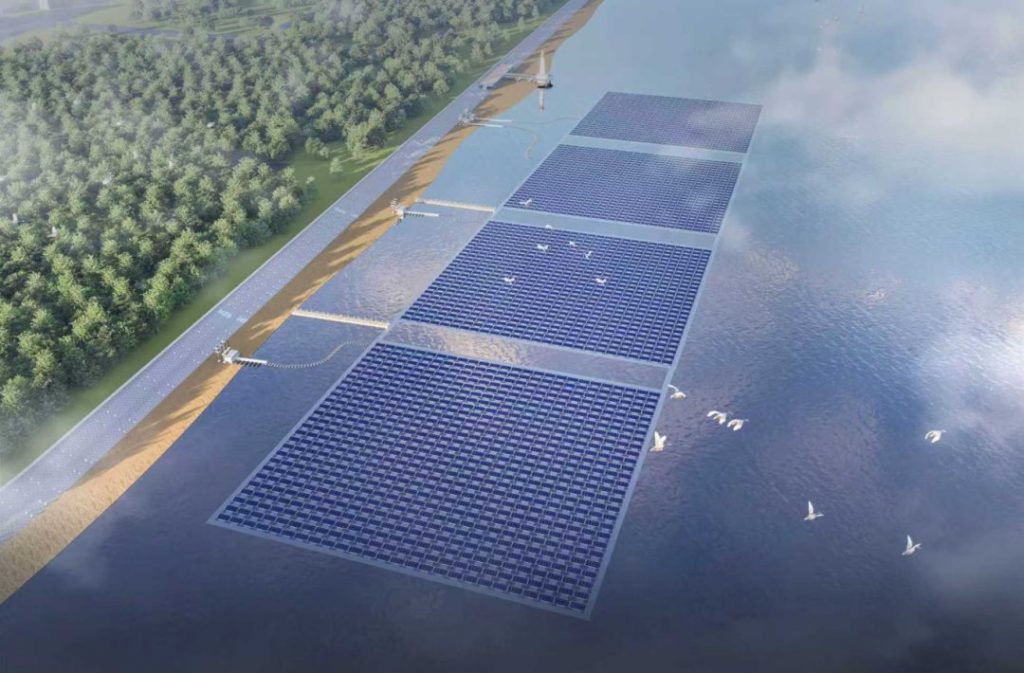
Nigeria plans to build its first floating solar power project, a 7-megawatt facility through the Rural Electrification Agency (REA). The contract, awarded to the China Civil Engineering Construction Corporation (CCECC), is expected to provide the University of Lagos (UNILAG) with safe, clean, and reliable electricity, reducing its reliance on diesel and the national grid. The institution currently spends approximately ₦300 million per month on electricity.
Speaking on the project, CCECC stated that it will be “located on the lagoon waters surrounding the UNILAG campus,” and “will deliver reliable, safe, stable and clean electricity to one of Nigeria’s foremost academic institutions.”
It added that, “upon completion, it is set to become Nigeria’s first-ever floating solar power plant, marking a significant milestone in the country’s renewable energy journey.”
Why this matters
1. Efficient Land Arbitrage
Lagos is surrounded by water. Approximately 22 per cent of the state is covered by the Atlantic Ocean, lagoons, creeks and wetlands. There is a shortage of land in Lagos, and the little left is fraught with dispute and requires an arm and a leg to purchase. Deploying floating solar on idle water surfaces avoids land acquisition drama, purchase cost, resettlement issues, or competing with agriculture. It also helps leave fertile land open for agriculture or urban development.
2. Higher Energy Efficiency
Water has a natural cooling effect, which keeps panel temperatures lower than those of roof or ground-mounted systems. Solar panels are sensitive to heat; their efficiency drops as they get hotter. However, with these panels sitting on water, they benefit from a natural “heat sink” effect. This typically improves the efficiency by 5 to 15 per cent.
3. Water Preservation and Grid Synergy
Floating photovoltaics (FPVs) help shade the water from the impact of direct sunlight, thereby significantly reducing evaporation losses by 70%. This inhibits the growth of toxic algal blooms. When paired with hydropower dams, FPVs share grid transmission infrastructure, making power more readily available to the end user.
Floating solar plants are a brilliant idea for countries with high population density, such as Nigeria, which ranks sixth in the list of countries (and dependencies) by population, with a population density of 226 people per Km². It is a win-win situation for energy production and the water bodies.